Block Printing Process

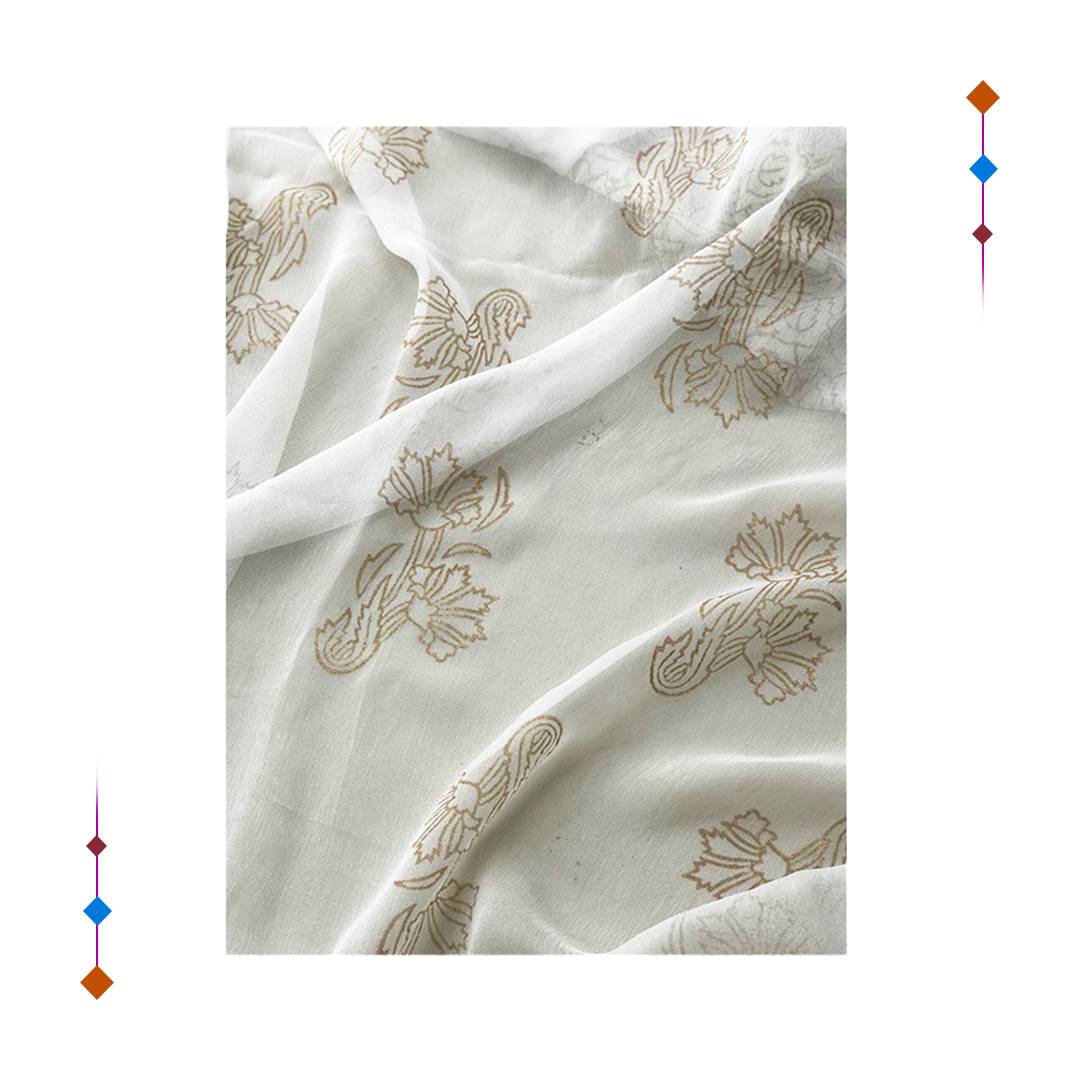
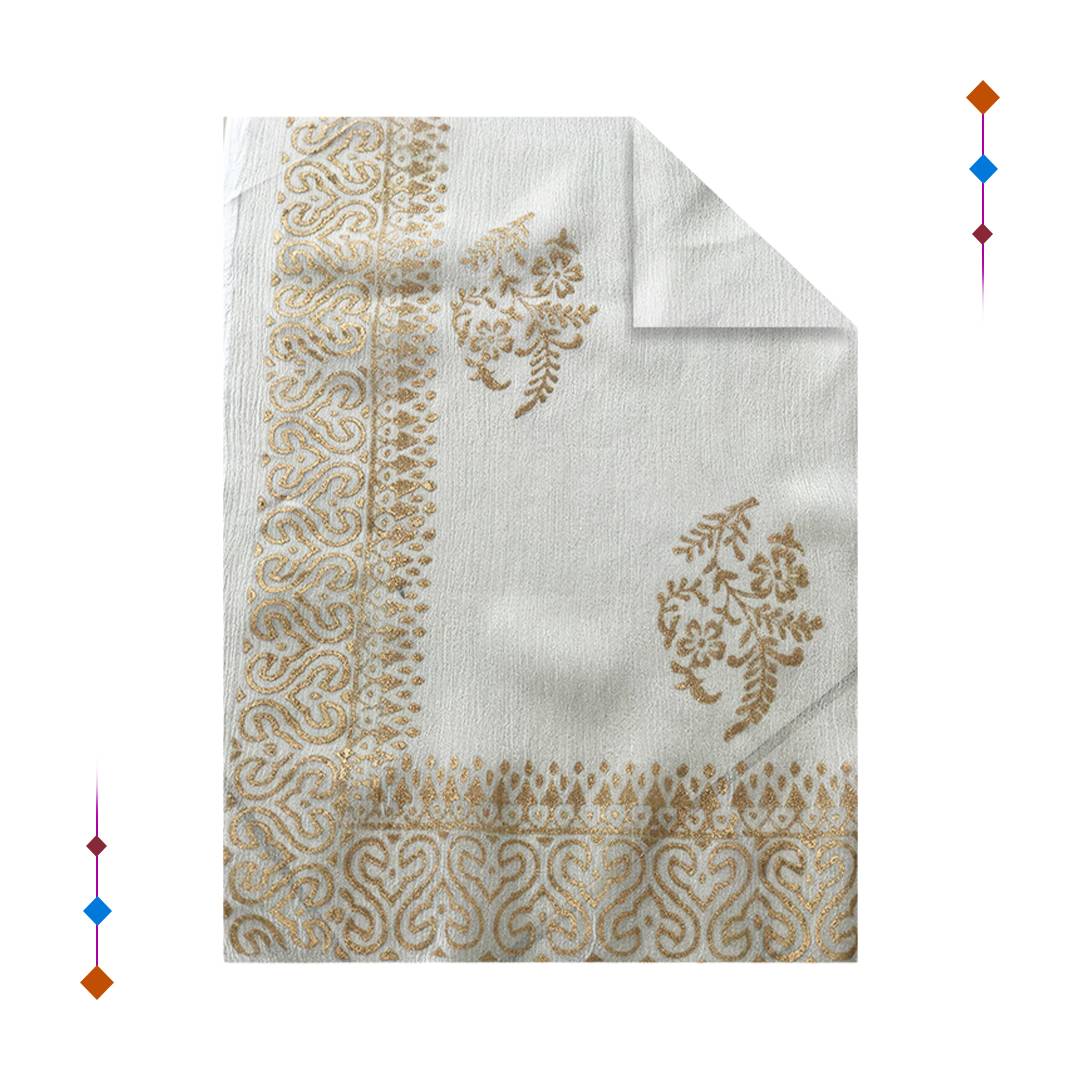
Block printing is simple in idea, rich in result. You carve a design into a block, ink it, and press it onto fabric or paper. Repeat, and a pattern comes up with that unmistakable hand-made rhythm.
In Pakistan, this craft lives vividly, especially in Sindh and parts of Punjab, where workshops still pass blocks and secrets down through families.
Types of Block Printing
Here are some methods that may not be literal block printing, but people usually compare them when choosing a technique. Let me tell you what is truly block-based and what’s adjacent.
1- Woodblock Printing
The classic. Artisans carve designs into hardwood like sheesham. Each color gets its own block. The block is inked and stamped by hand, building the pattern color by color.
2- Linocut Printing
Similar idea, different material. Linoleum is softer than wood, which allows artists to carve faster and achieve bold, graphic shapes. Great for art prints and small runs on paper and fabric.
3- Screen Printing
Not block printing. A screen is like a thin net. Artists put a cut-out picture called a stencil on the screen. Ink goes through the open parts and makes the picture on the cloth or paper. It is fast and the prints look the same each time, so it’s good for making many copies. In Karachi and Lahore, many studios use screens for the first big colors.
4- Digital Block Printing
Again, not true block printing. This means digital artwork that mimics the textures and misalignments of hand blocks, then gets printed with inkjet or heat transfer. It is useful when you want the look but need speed, color control, or very large yardage.
5- Hand Block Printing
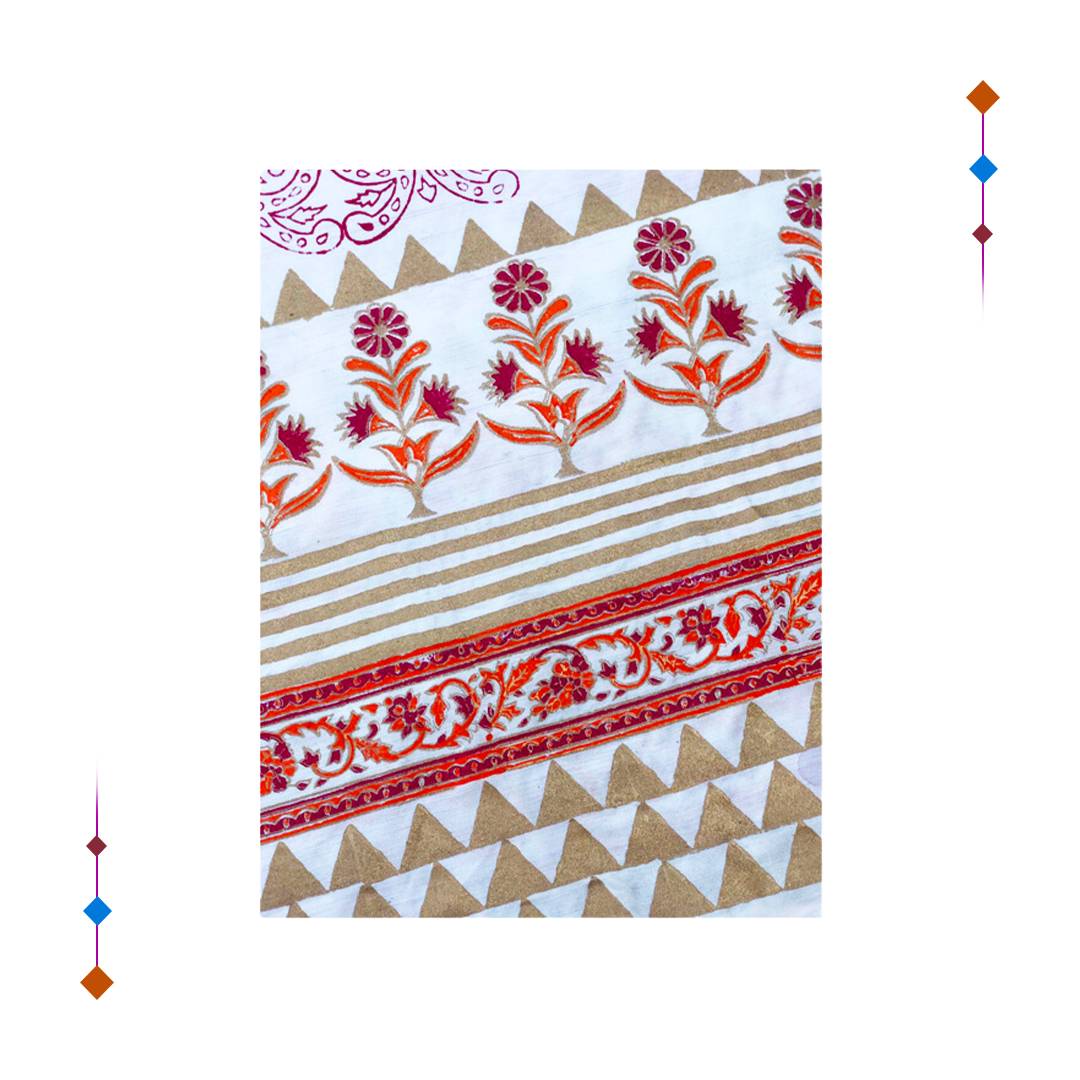
Back to the heart of it. Hand-carved blocks, hand alignment, hand pressure. You see tiny variations between repeats, which is exactly why people love it.
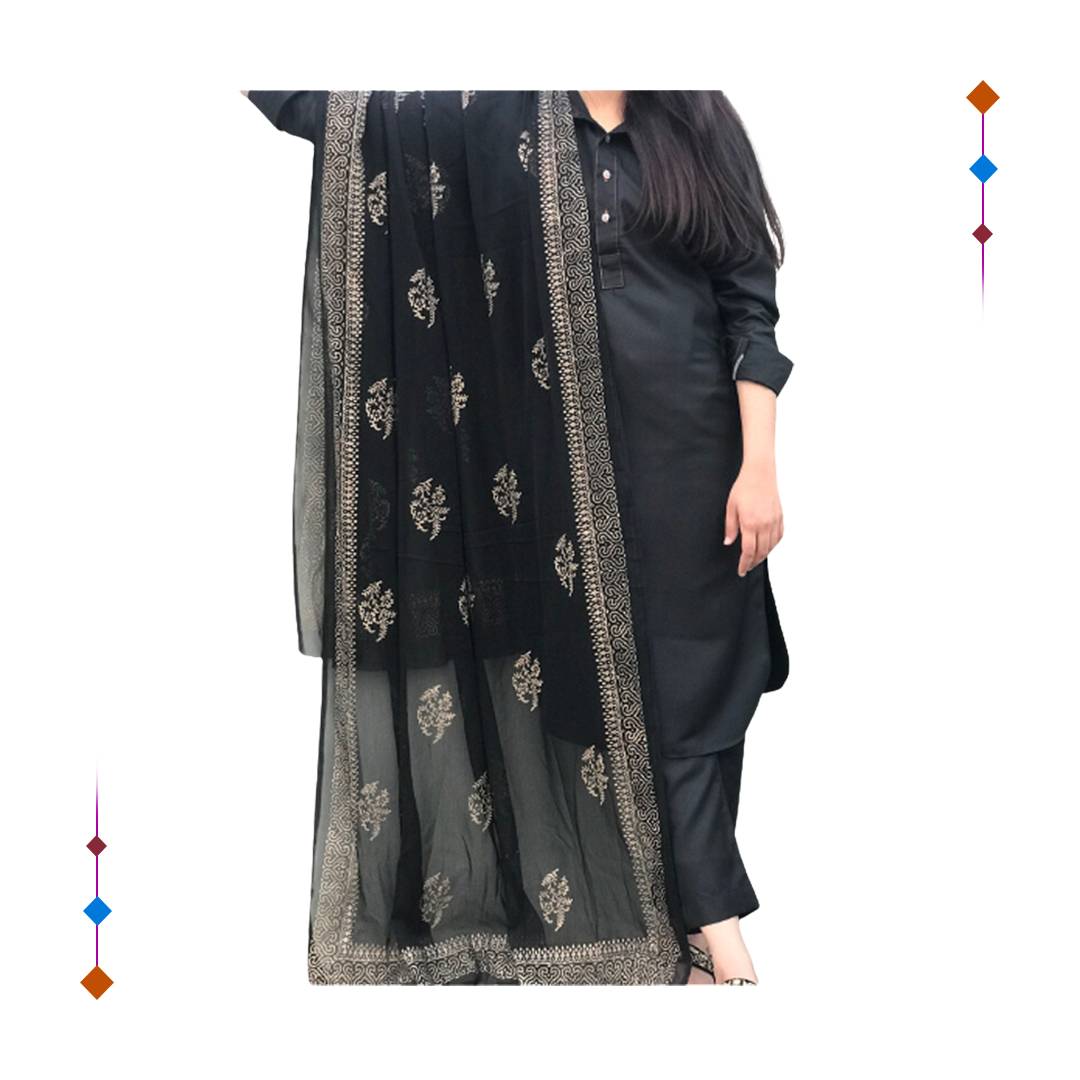
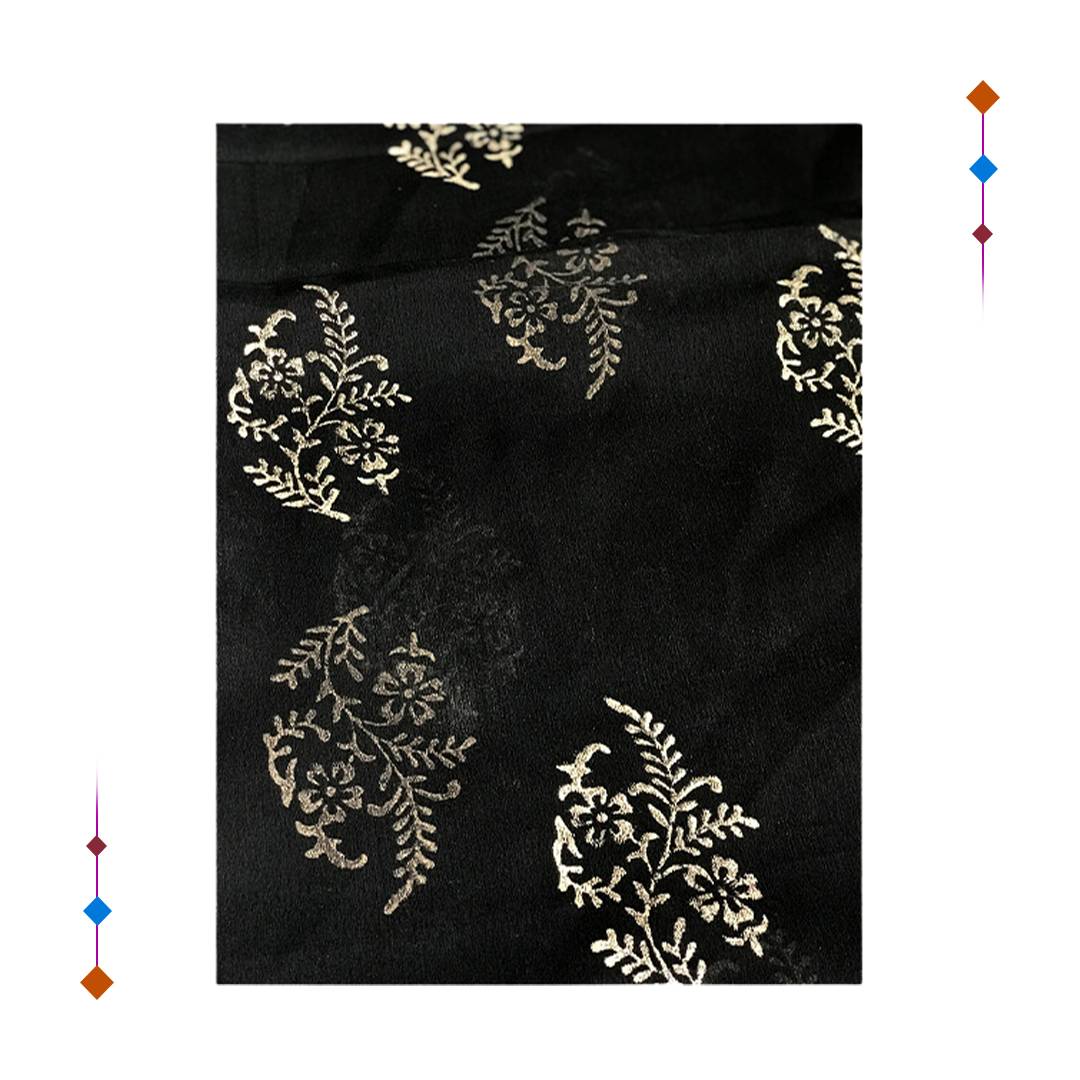
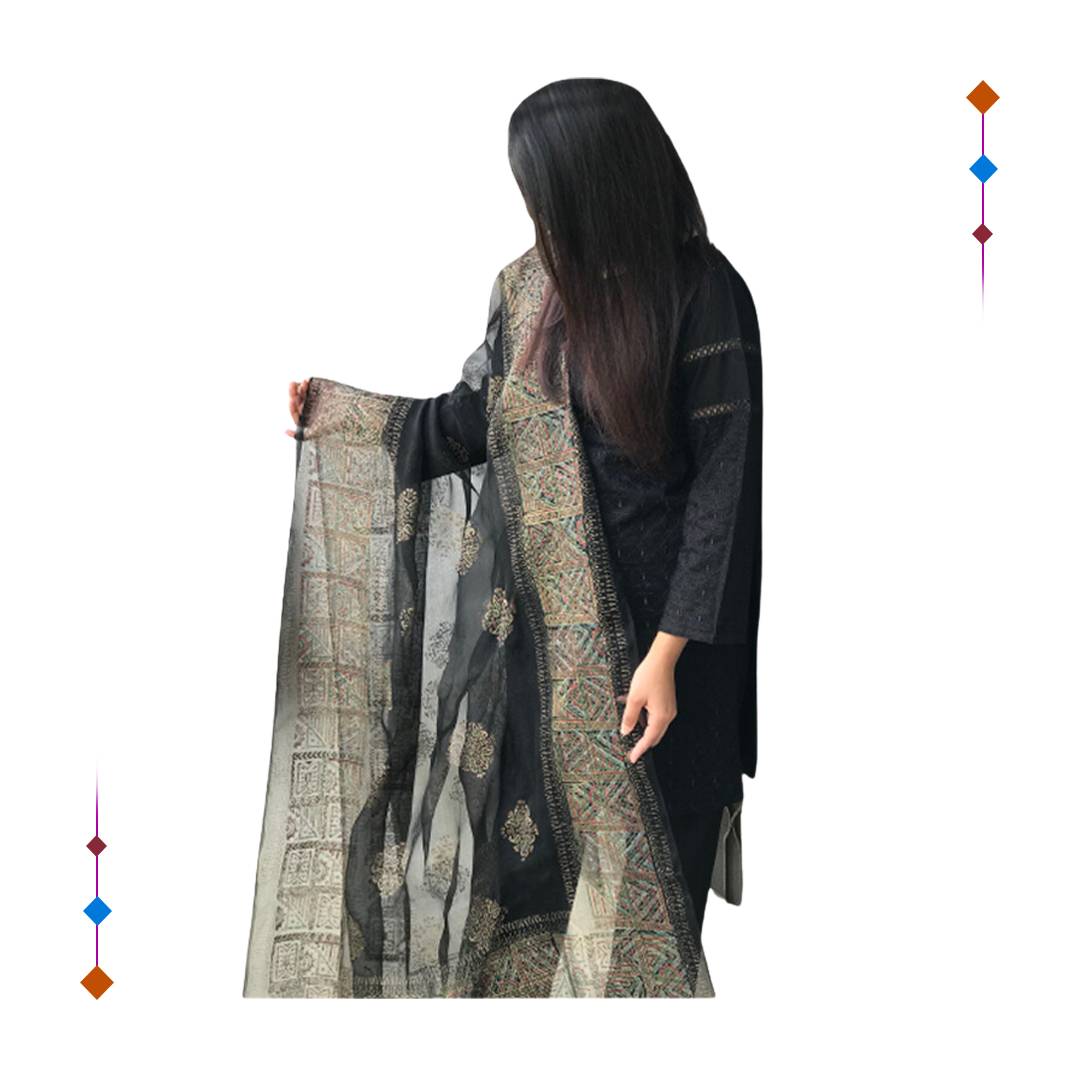
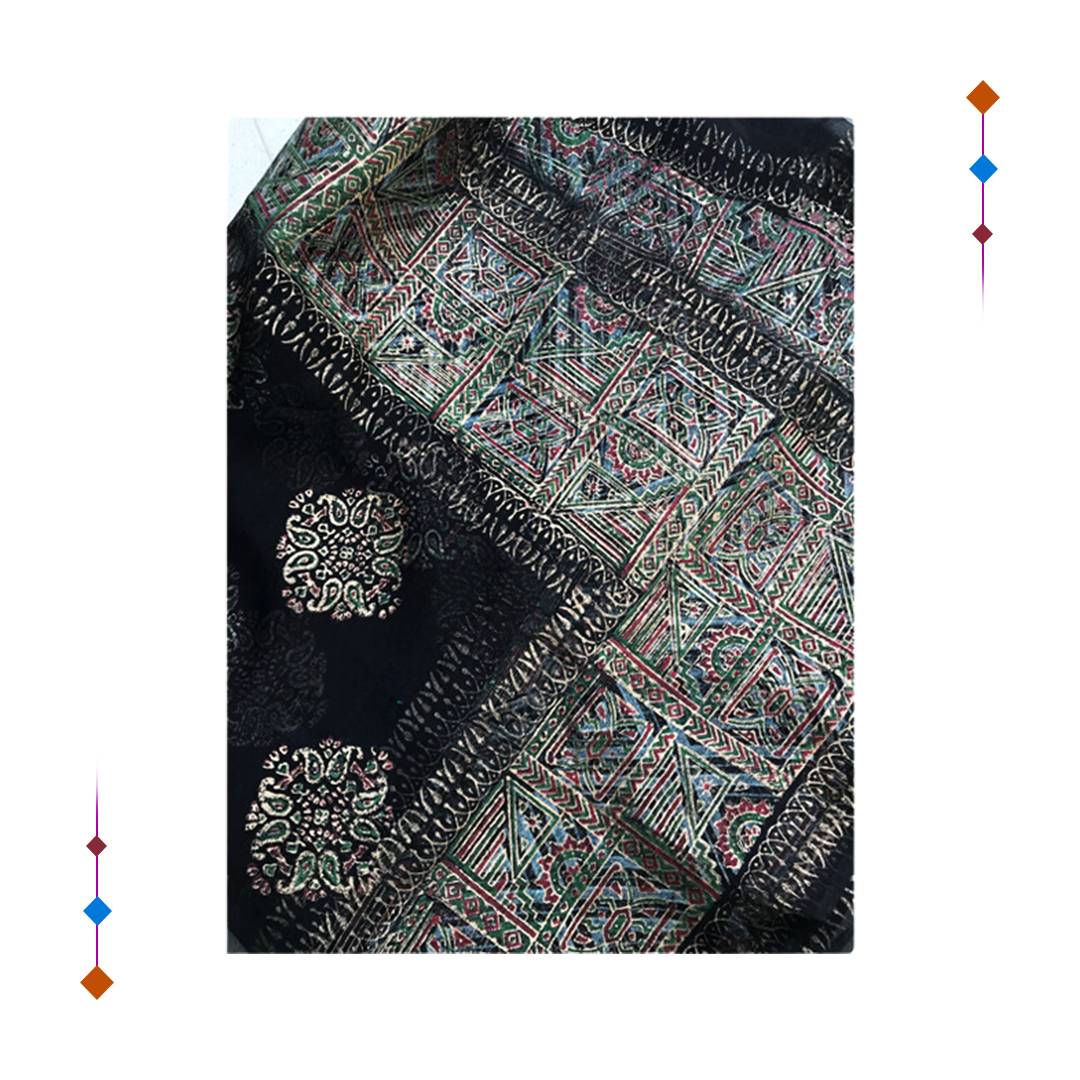
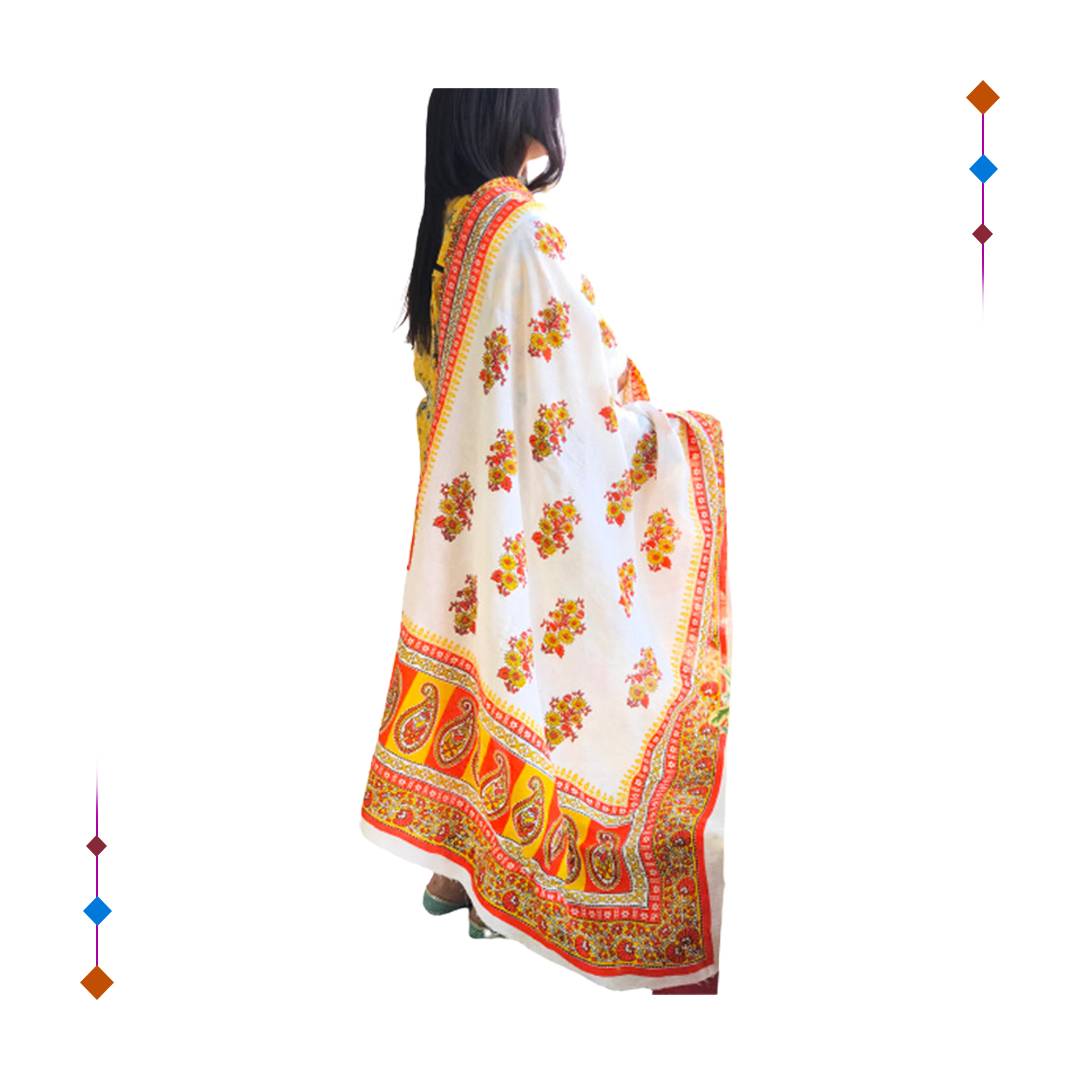
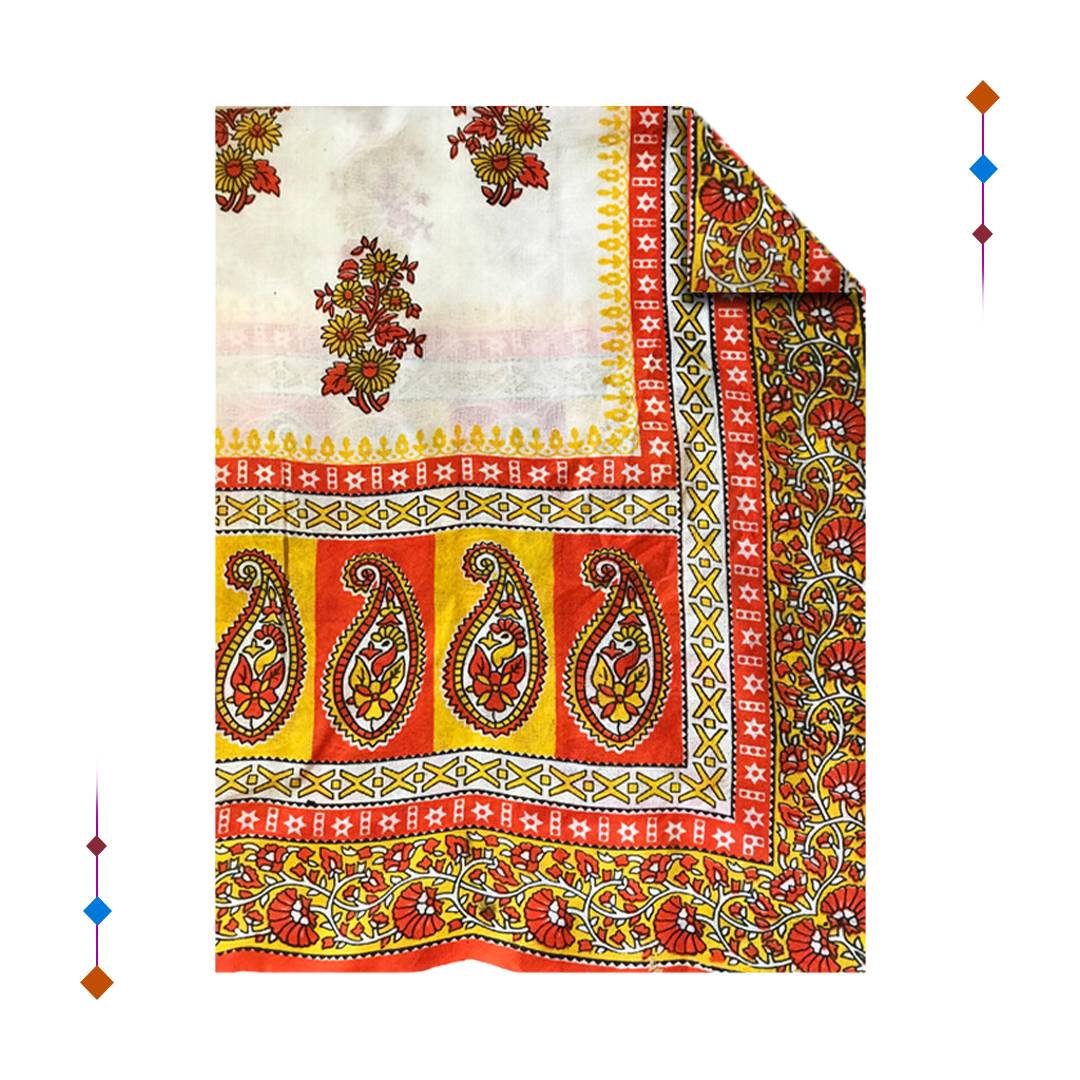
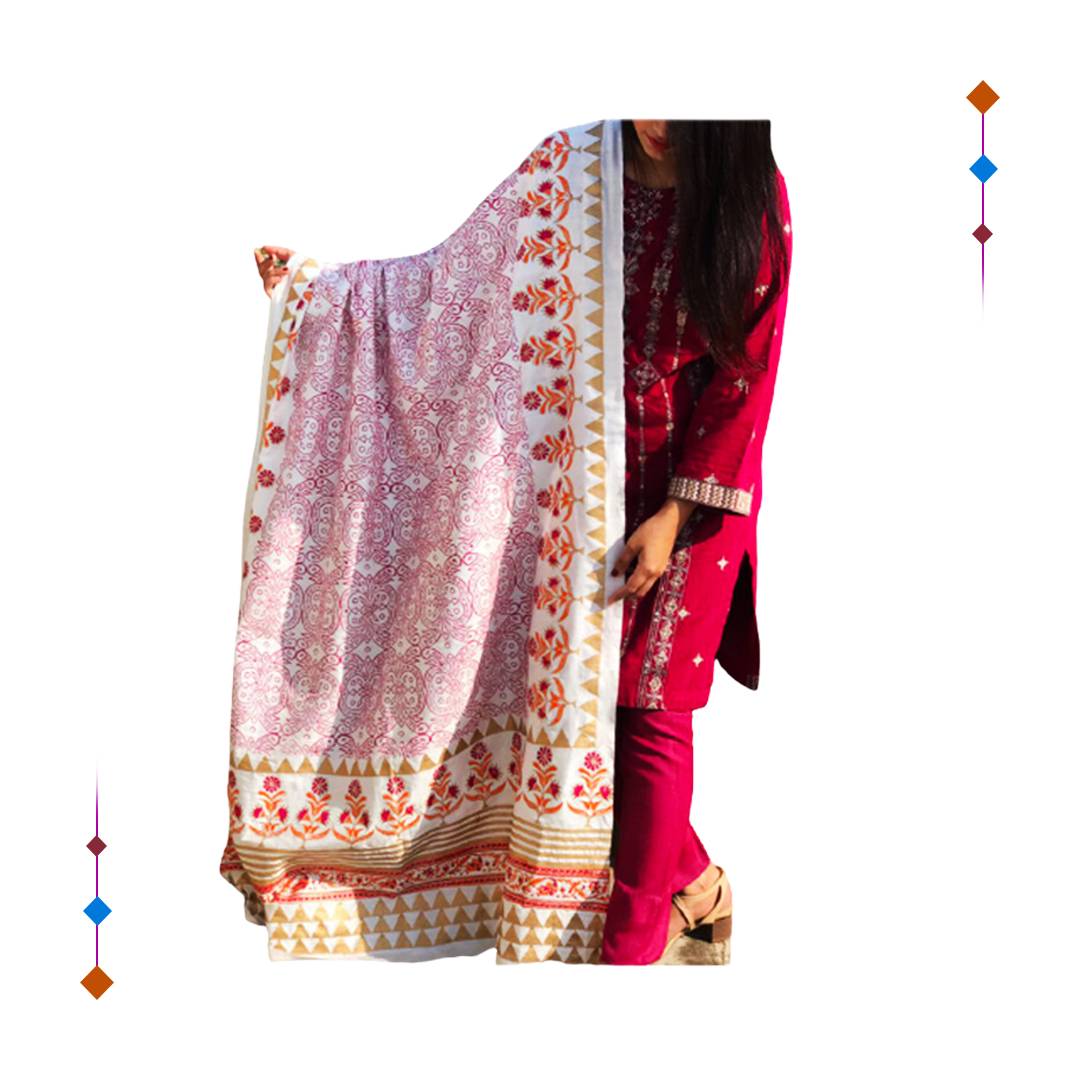
Explore Handmade Block Print Dupattas
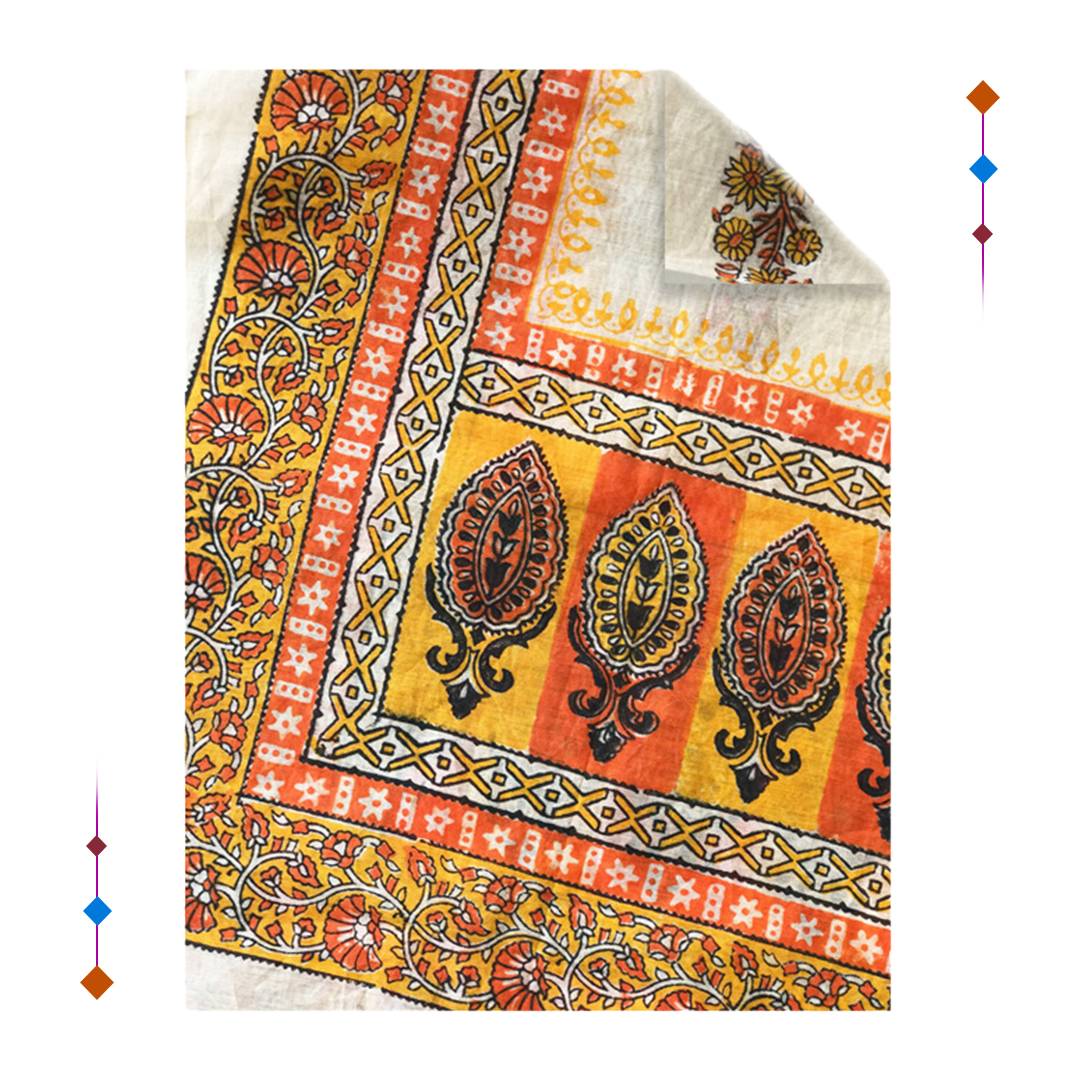
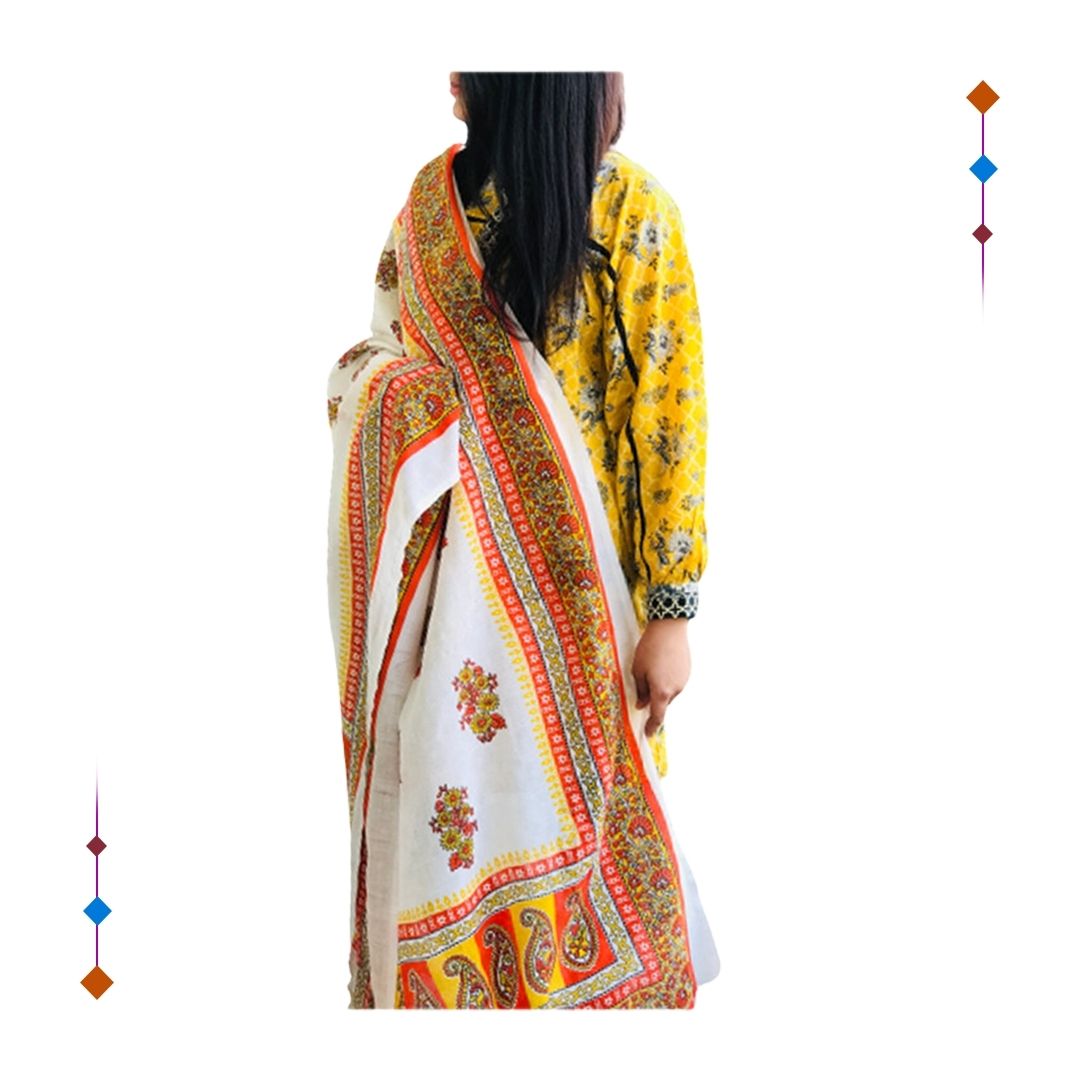
Process of Block Printing
Let’s break it down into the core stages. Whether you’re printing in Hala, Hyderabad, or a small studio at home, the logic is the same.
Designing the Block
- Sketch the motif or repeat pattern.
- Transfer to the block surface.
- Carve the negative spaces so the raised areas will carry ink.
- Make one block per color. Complex patterns can need a small library of blocks for outlines, fills, and borders.
Preparing the Fabric or Paper
- Wash fabric to remove oils and sizing so colors bond well.
- For fabric, many printers pre-mordant with alum or other fixatives depending on the dye system.
- Stretch or tape down the substrate to keep prints aligned.
Applying the Dye or Ink
- Pour dye or ink into a shallow tray lined with felt or mesh so the block picks up an even layer.
- Tap the block lightly to load it, then place, align, and press.
- Use registration marks or the edge of the block to keep the repeat straight.
- Print all impressions of one color first, then move to the next color after drying time.
Drying and Finishing
- Air dry between colors to avoid smudging.
- Fix the color. For pigment inks, heat setting is common. For certain dyes, steaming or chemical fixation is used.
- Final wash and press to soften the hand and remove any excess residue.
Uses of Block Printing Today
It is popular in fashion and home accessories industry, where designers use block prints to produce unique fabrics, clothes, and other accessories. The uniqueness is that each is hand crafted and every print is different from the other. People focused on using products that are unique and handcrafted appreciate the handmade quality of block-printed textiles unlike the other products that are made in bulk.
1- Textiles and Fashion
Shawls, dupattas, kurtas, lawn and cotton yardage, scarves, sarees. Hand block prints look great on breathable natural fibers like cotton and silk.
2- Stationery and Paper Goods
Art prints, greeting cards, notebooks, gift wrap. Linocut and small woodblocks shine here.
3- Wall Art and Home Décor
Tablecloths, cushion covers, curtains, wall hangings, lampshades. Repeats can scale from delicate borders to bold statement motifs.
Block Print Examples & Styles
Nowadays the block printing is greatly different in every region and traditions. Some famous examples include:
Bagru and Sanganeri Prints from India: Known for having floral and paisley patterns with very fine and delicate details.
- Ajrak: Deep indigo, madder red, and black with complex geometry and star-like repeats. Known across Sindh and also in Kutch. Involves resist techniques and multiple dye baths.
- Floral buta and jaal patterns: Creepers, vines, and paisleys arranged in all-over lattices. Common on summer cottons.
- Minimal geometric repeats: Checks, dots, stripes made with small utility blocks for a crisp, modern look.
- Linocut art prints: Bold, high-contrast imagery with clear carving marks visible in the ink.
Hand Block Printing in Pakistan
What this really means is living craft, not nostalgia. In Sindh, particularly around Hala and its craft belt, Ajrak is a cultural symbol. Workshops cut intricate blocks, prepare natural dyes alongside modern pigments, and print long lengths that become shawls, stoles, and cloth gifted at celebrations.
In Karachi, Lahore, and Multan, you’ll find studios mixing methods: screen for speed on base layers, hand blocks for borders and highlights. The result keeps that human touch shoppers are after, without losing practicality.
Common materials and tools you’ll see:
- Blocks: Sheesham wood, sometimes brass-inset for very fine lines.
- Dyes and pigments: Indigo and madder for traditional palettes, plus reliable modern pigments for expanded color.
- Tables: Long padded printing tables with registration guides.
- Simple chemistry: Alum, gum, or other binders and mordants tailored to the dye system.
Challenges and why it persists:
- Still, the market keeps coming back because each piece looks alive. Slight variations aren’t flaws. They’re the signature.
- Skill takes time to learn, and blocks are expensive to carve.
Conclusion
People still love block printing because it feels real. A carved block is pressed on cloth or paper and you can see the maker’s touch in every repeat.
In Pakistan, this shows in Ajrak, a famous printed cloth. New studios keep trying fresh ideas while using the old ways. Whether you print one scarf or many shirts, the same steps help: plan your design, prepare the cloth, print with care, and let the tiny differences make it special.